

Why Does Depression Make Simple Tasks Feel Overwhelming?
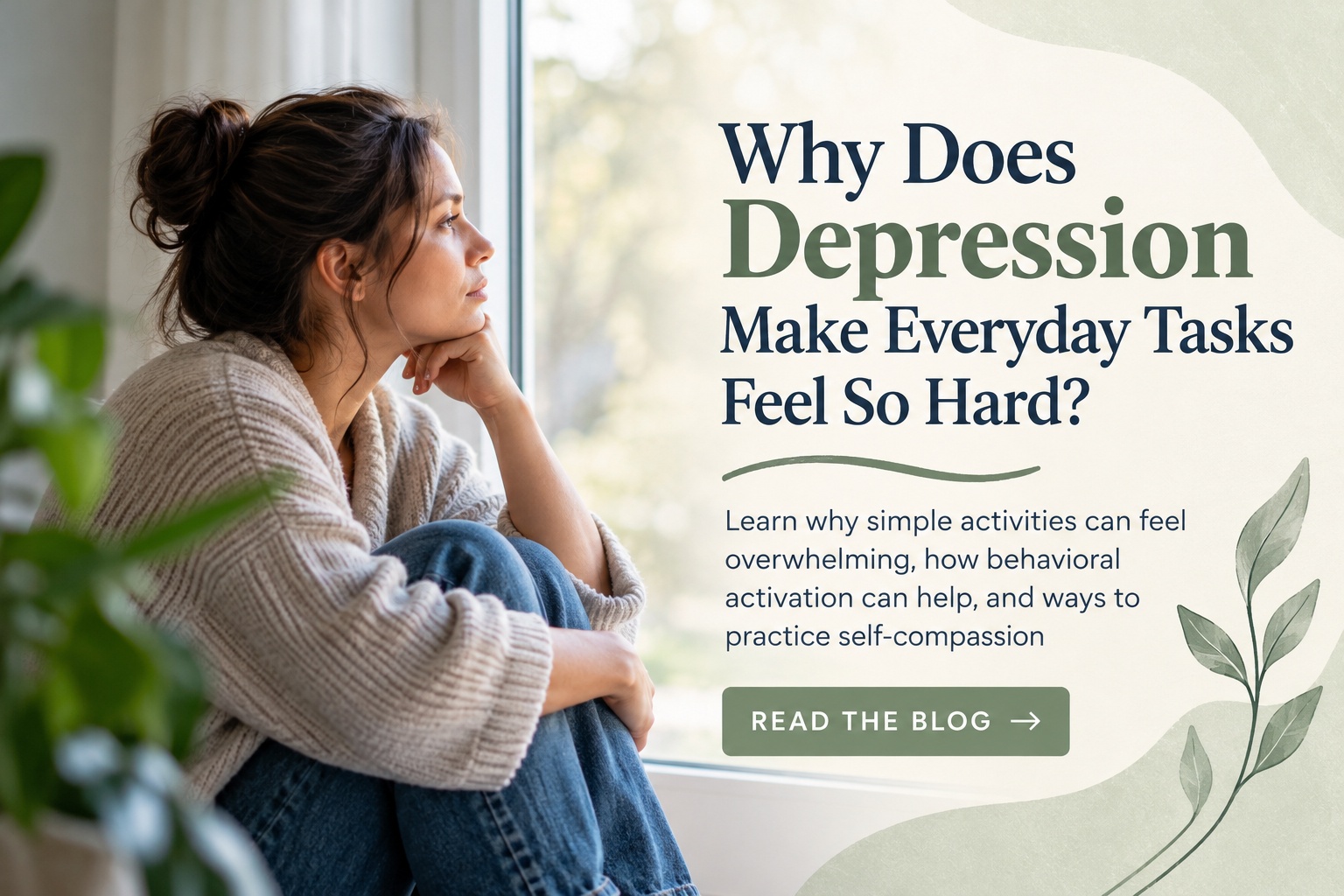
One of the challenges of depression is that we often continue to hold ourselves to the same expectations we had before experiencing symptoms.
Someone who normally manages work, household responsibilities, relationships, and personal activities without much difficulty may suddenly find those same tasks exhausting.
When we can’t accomplish as much as we normally would, we may begin feeling frustrated or disappointed in ourselves.
Thoughts such as “I should be doing more” or “Why can’t I handle this?” can contribute to an ongoing cycle of self-criticism.
Depression can also affect how rewarding everyday experiences feel. Activities that once brought happiness or satisfaction may no longer produce those same feelings.
For example, someone might take a walk, spend time with a friend, or finish a household task but feel discouraged because the experience wasn’t as enjoyable as it used to be.
This is where adjusting our expectations and recognizing effort can become an important part of managing depression.
Recognizing Effort Instead of Focusing Only on Results
When someone is experiencing depression, completing familiar tasks may require significantly more effort than usual.
Imagine rating the effort required to complete a task on a scale of 1 to 10.
On a typical day, doing laundry or going for a walk might feel like a 2 or 3. During a period of depression, that same activity might feel like an 8 or 9.
The task hasn’t changed, but the amount of energy and motivation needed to complete it may be very different.
Recognizing that difference matters.
Rather than focusing only on what wasn’t accomplished, we can begin acknowledging the effort involved in what we did complete.
Getting dressed, preparing a meal, reaching out to a friend, or attending work may represent meaningful accomplishments during a difficult period.
These efforts deserve recognition, even when they don’t produce the same satisfaction they once did.
Learning to offer ourselves encouragement and compassion, rather than criticism, can help us develop a healthier approach to managing depression.
What Is Behavioral Activation, and How Can It Help With Depression?
One evidence-based approach used in treating depression is called behavioral activation.
Behavioral activation focuses on gradually increasing participation in meaningful, manageable activities, even when motivation or enjoyment is low.
Depression can cause people to withdraw from activities, relationships, and responsibilities. Unfortunately, withdrawing can sometimes create a cycle in which we have fewer opportunities to experience connection, accomplishment, or enjoyment.
Behavioral activation helps interrupt that cycle by encouraging small, intentional steps.
Some examples include:
Taking a short walk or spending a little time outdoors.
Calling or texting a friend or family member.
Completing one manageable household task.
Participating in an activity that previously brought enjoyment.
Maintaining parts of a daily routine, even when they require extra effort.
An important part of this approach is recognizing that an activity may not immediately make us feel happier or more motivated.
For example, taking a walk may not feel as enjoyable as it did before depression developed. However, it may still provide an opportunity for movement, fresh air, or a sense of accomplishment.
Sometimes the benefit comes from continuing to participate in meaningful activities rather than experiencing an immediate improvement in mood.
The goal isn’t to push through every difficult feeling or expect ourselves to function exactly as we did before. Instead, it’s about identifying realistic steps, recognizing the effort they require, and gradually rebuilding engagement in everyday life.
How Can You Practice Self-Compassion When You’re Depressed?
When experiencing depression, it’s easy to focus on what we think we should be doing rather than acknowledging what we’re already managing.
Developing a more compassionate perspective can help us recognize that progress doesn’t always look the same from one day to the next.
Instead of thinking, “I didn’t do enough today,” we might ask ourselves, “What did I accomplish today, and how much effort did that require?”
This doesn’t mean ignoring responsibilities or pretending that depression isn’t difficult. It means recognizing that depression can make everyday experiences more challenging and that our efforts still matter.
Small steps may not always feel significant in the moment, but they can be meaningful parts of managing depression.
When Should You Consider Therapy for Depression?
Depression can affect many aspects of daily life, including relationships, work, motivation, and overall well-being.
If symptoms continue, become overwhelming, or begin interfering with everyday activities, seeking professional support can be an important step.
Working with a qualified mental health professional can help individuals better understand their symptoms and develop strategies for managing depression.
Approaches such as cognitive behavioral therapy (CBT), behavioral activation, and self-compassion practices can help people identify unhelpful thought patterns, gradually reengage in meaningful activities, and develop healthier ways of responding to challenges.
At Bridge to Well-Being Counseling Center, our therapists provide compassionate, individualized support for people experiencing depression and other mental health concerns. We offer in-person counseling in Pittsburgh and New Kensington, Pennsylvania, along with telehealth services throughout the state.
If you’re interested in learning more, explore our depression therapy services or cognitive behavioral therapy (CBT) to see how counseling may help.
Managing depression isn’t always about accomplishing more or immediately feeling better. Sometimes, it’s about recognizing how much effort you’re already putting forward, giving yourself credit for those efforts, and allowing yourself the support needed to keep moving forward.
Source: Centers for Disease Control and Prevention. Symptoms of Anxiety and Depression Among Adults: United States, 2019 and 2022.